
Plugin system (v4.2)
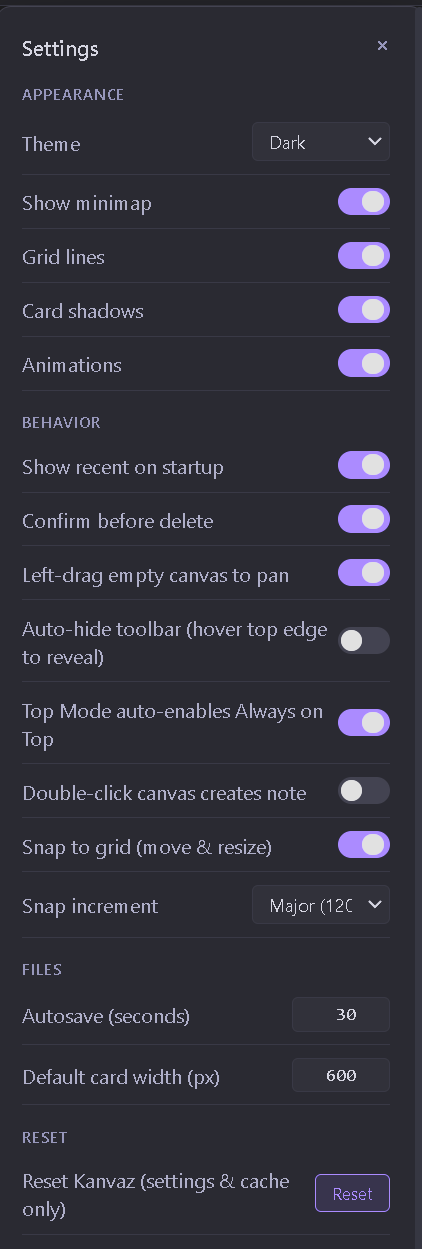
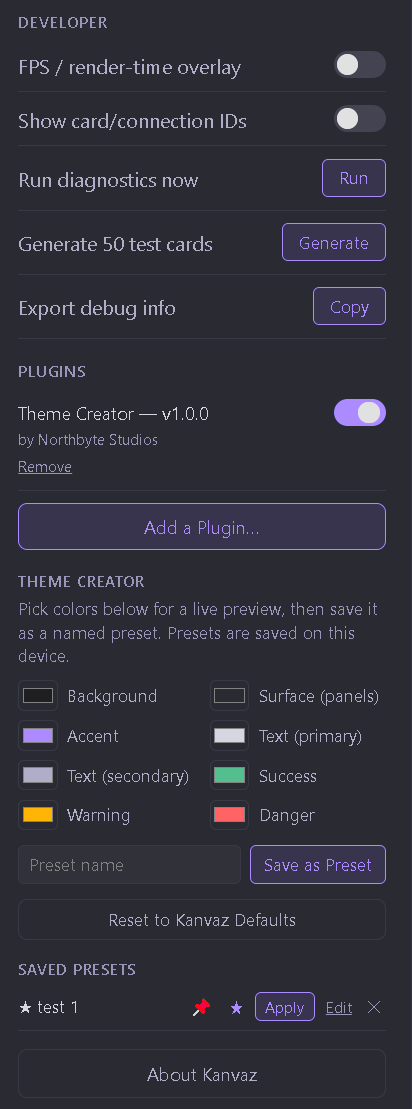
window.KanvazPluginAPI: plugins register new card types, ship full alternate themes, add their own Settings panels. Every install goes through a main-process consent dialog; plugins can't self-approve.
Computed live in your browser via the Performance API. Nothing here is sent anywhere: check DevTools → Network yourself.
View this page's source →Visual reference workspace for VFX and 3D artists. Plugin system with a local-only MCP Bridge: an AI agent can read and edit the active board through 30 tools, off by default and undo-reversible. Command palette, a template gallery, text cards, safer .kanvaz and .pur import, GitHub Actions CI. Free forever, MIT-licensed.
What Kanvaz looks like
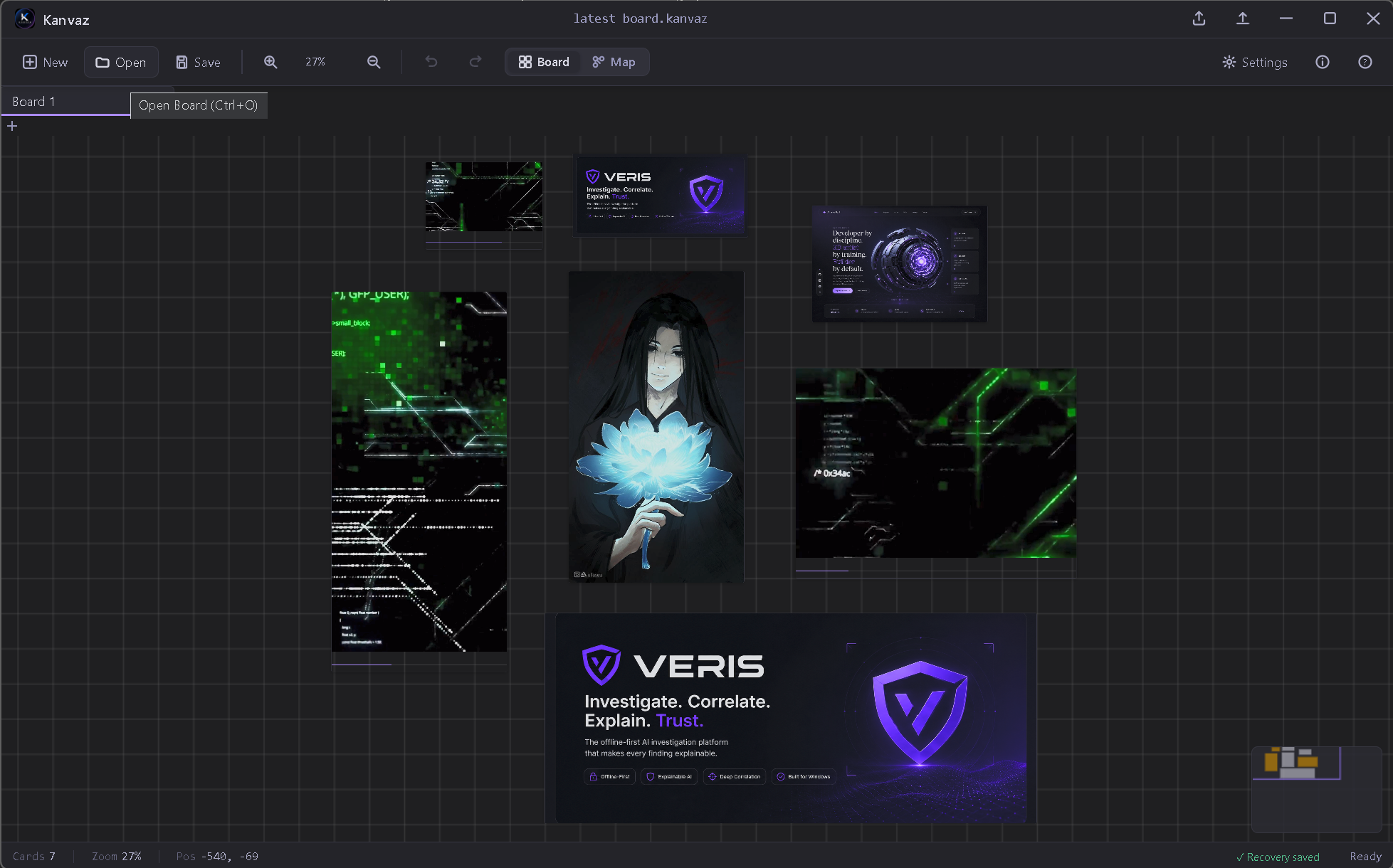
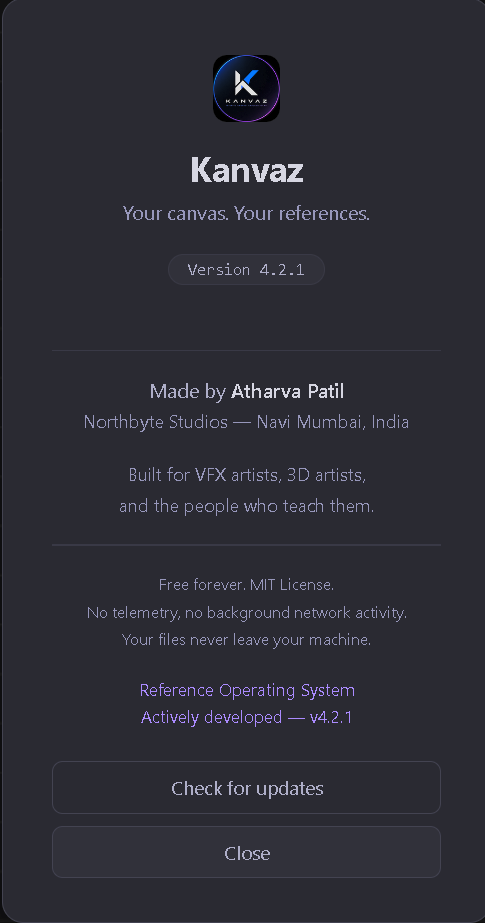
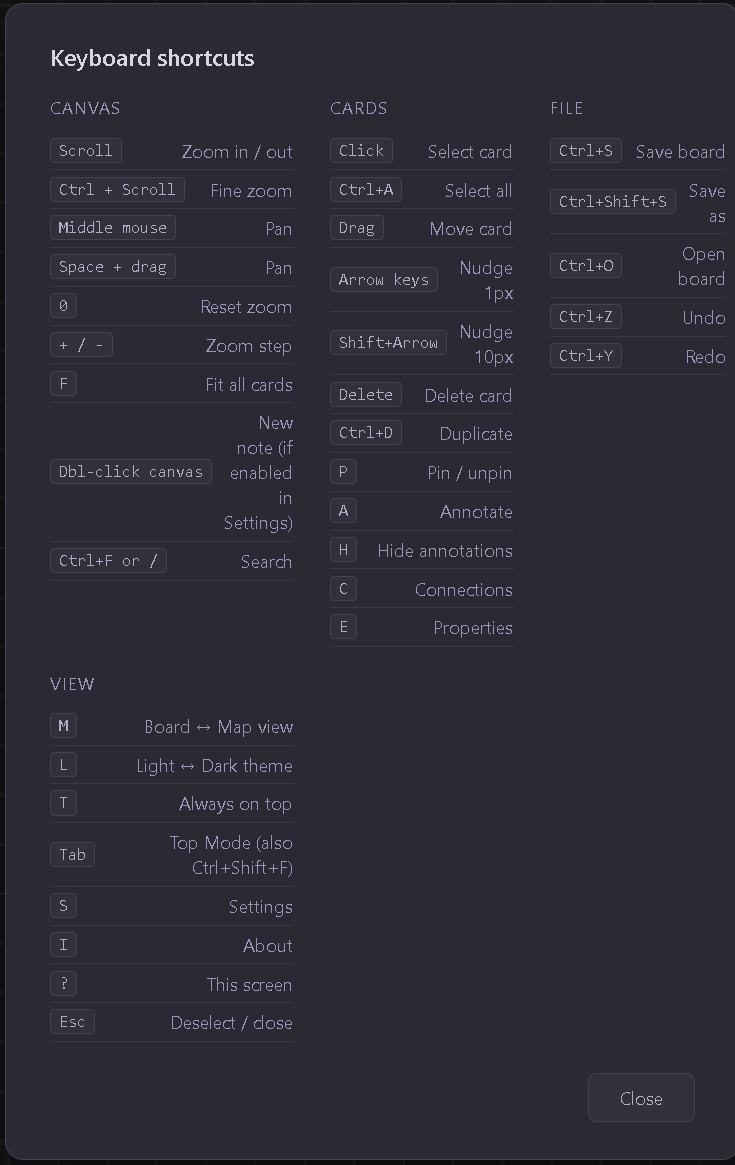
Why it exists
Before Kanvaz was a public release, it was a gift, built for the VFX and 3D community I'm part of, for the friends and teachers who needed a fast, no-friction place to drop reference images while working. Most reference tools are either too heavyweight or built for a different workflow entirely.
Kanvaz does one thing: give you a canvas, let you throw images, GIFs, and video references onto it, and stay out of your way.
What's inside
window.KanvazPluginAPI: plugins register new card types, ship full alternate themes, add their own Settings panels. Every install goes through a main-process consent dialog; plugins can't self-approve.
First official plugin: in-app theme editor, live preview, presets, one-click reset. Shipped with the design-system audit that unified radii, shadows, and animation tokens.
Moved from a giant base64-inline JSON blob to a real zip container with per-asset SHA-256 integrity hashes. Roughly 33% smaller files; one damaged asset degrades gracefully instead of losing the whole board. Backward compatible.
Two new reference card types on top of the original six. File cards block executable/script types on open for safety. No new dependencies, no telemetry.
A local-only MCP server exposes the active board to an AI agent through 30 tools: board management, undo/redo, view control, card editing, and settings. Off by default; every AI-driven change lands in undo history exactly like a manual edit.
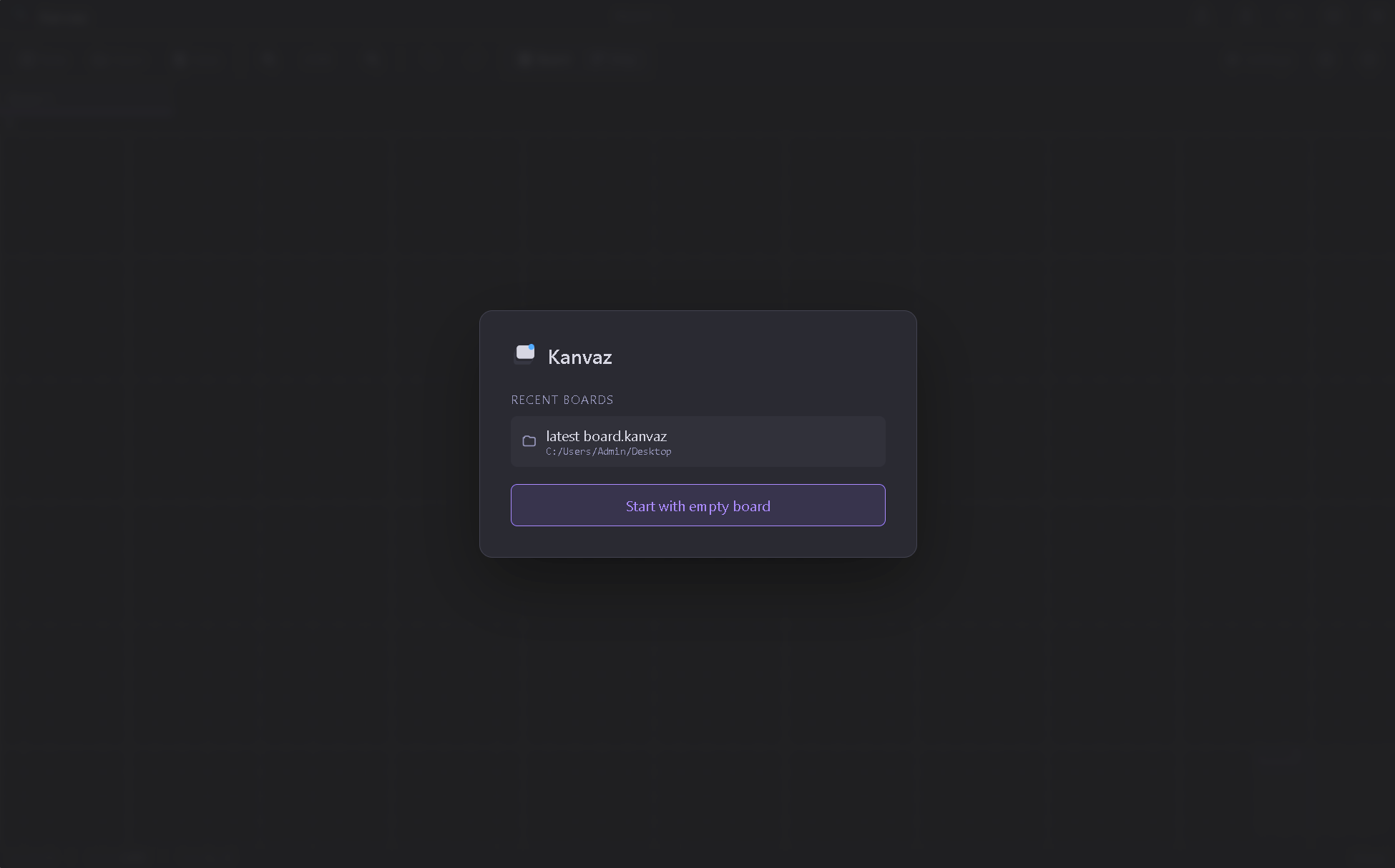
Start a board from a template instead of a blank canvas. Text cards join the reference-card lineup, and .pur (PureRef) import handles a wider range of real PureRef files after a fix to a legacy migration bug that was silently corrupting annotation data with Map View open.
v5.3.0 closed out the development arc that began after v4.6.1: four feature releases (template gallery, text cards, broader .pur import, Map View and annotation fixes), then a dedicated bug-bounty pass across the whole v4.7.0–v5.2.0 diff before shipping the final version.
That's the last actively-developed version for the foreseeable future. Real bugs still get fixed if someone reports one; new features aren't on a continued release cadence.
No subscription, no feature paywall, no telemetry, no internet connection required. Your files never leave your machine, and it stays free forever.